RAMP claims.
A complete starter ration that Changes How Cattle Eat. By creating a more robust rumen, cattle eat more, shorter meals over a 24-hour period. That leads to greater intake and energy utilization, as well as a smoother transition into the finishing ration.
Change in intake behavior resulting in greater DMI (dry matter intake)
Compared to a traditional grain and roughage-based starter ration, cattle started on RAMP consume more, smaller meals over more hours of the day. Cattle started on RAMP have greater continued intake into the evening and overnight, and continue that shift in consumption behavior when on a Sweet Bran finishing ration.
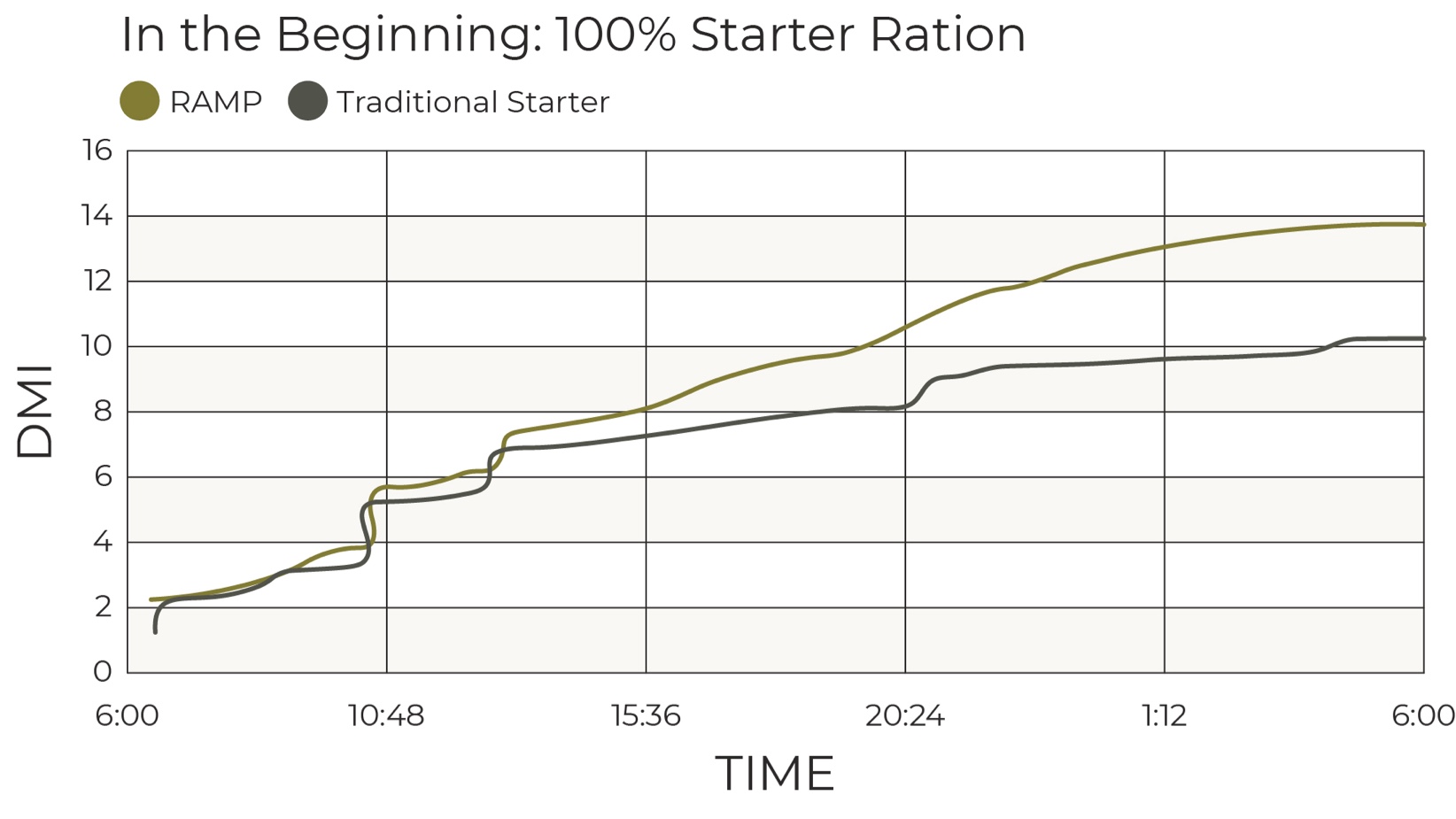
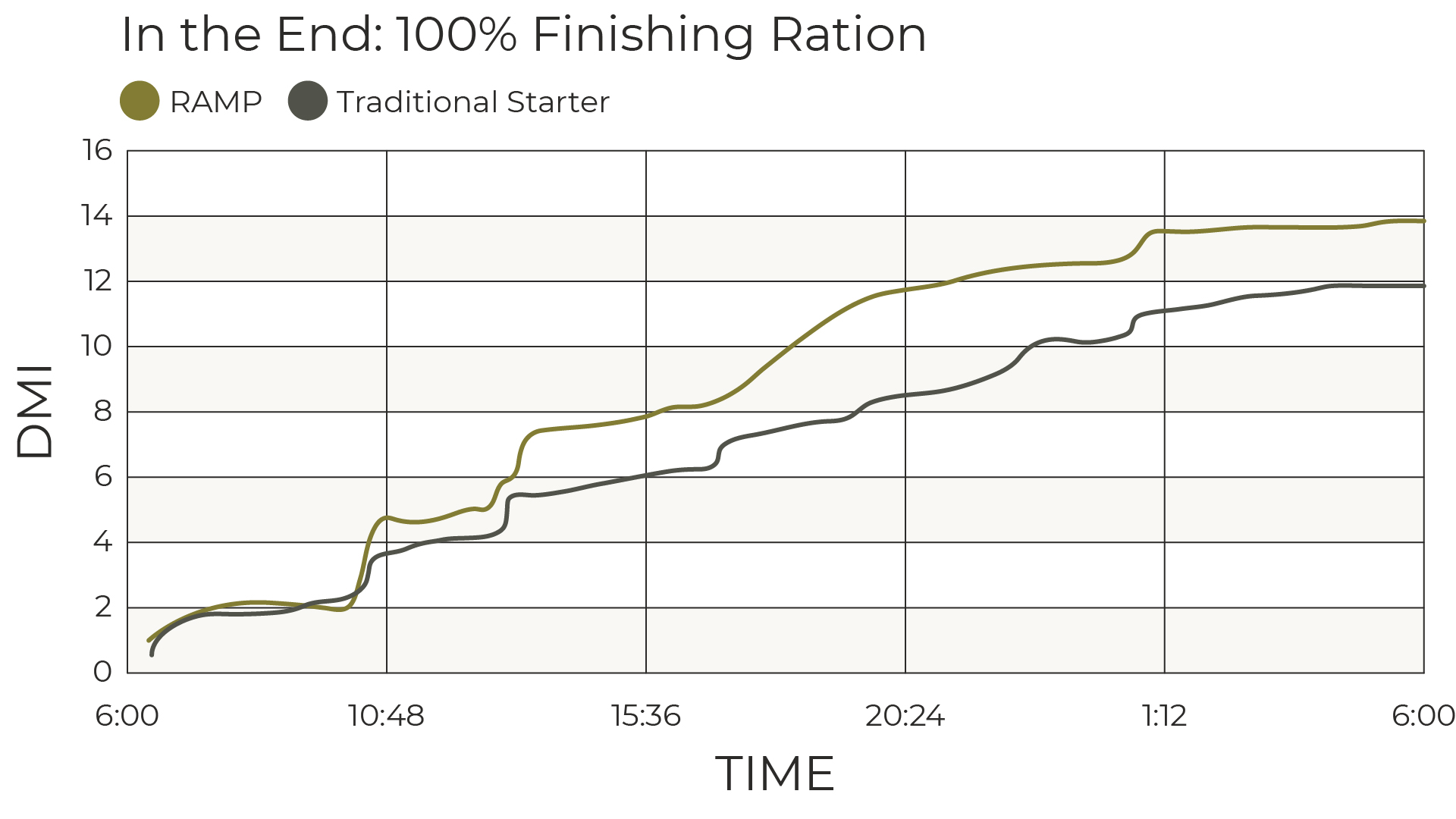
Cattle started on RAMP consume more, smaller meals over more hours of the day
-
Evaluation of RAMP in starter diets using rumen-fistulated cattle
Increase in gain
Cattle started on RAMP versus a traditional starting ration have an improved ADG (average daily gain).
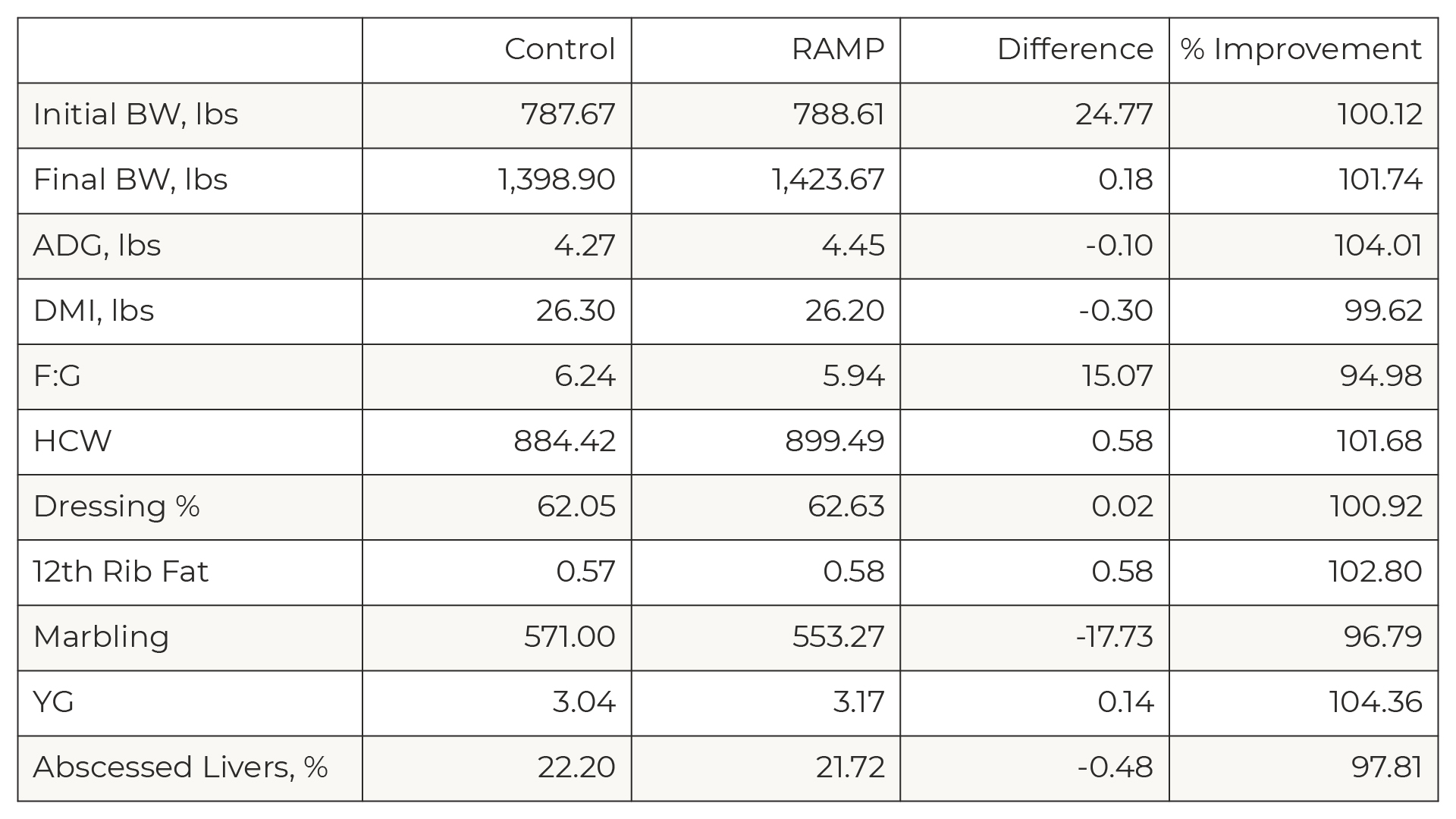
5% increase in ADG
16 lbs hot-carcass weight advantage with same days on feed
Improved feed efficiency
Research showed that, compared to a traditional starter ration, feeding RAMP to newly arrived calves improved feed efficiency the first three weeks cattle were in the feedlot and throughout finishing.
4% improvement in feed conversion
RAMP vs. a traditional diet results in a less variable and higher overall rumen pH
Higher rumen pH during the beginning of the feeding period alters feeding behavior for the entirety of the feeding period, resulting in greater feed and energy intake. Cattle started on RAMP also maintain a higher rumen pH during the finishing phase while maintaining greater feed/energy intake and utilization.
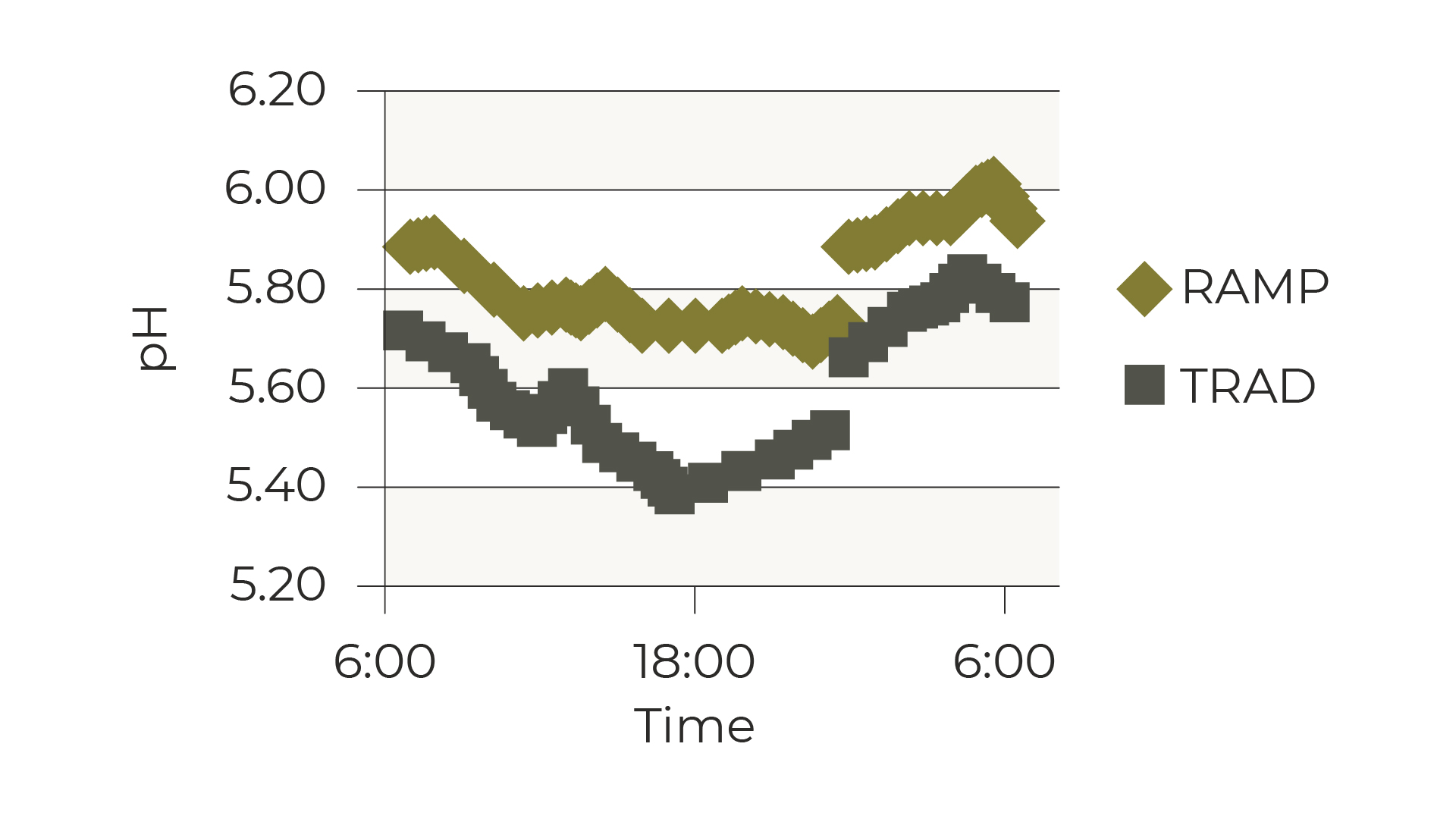
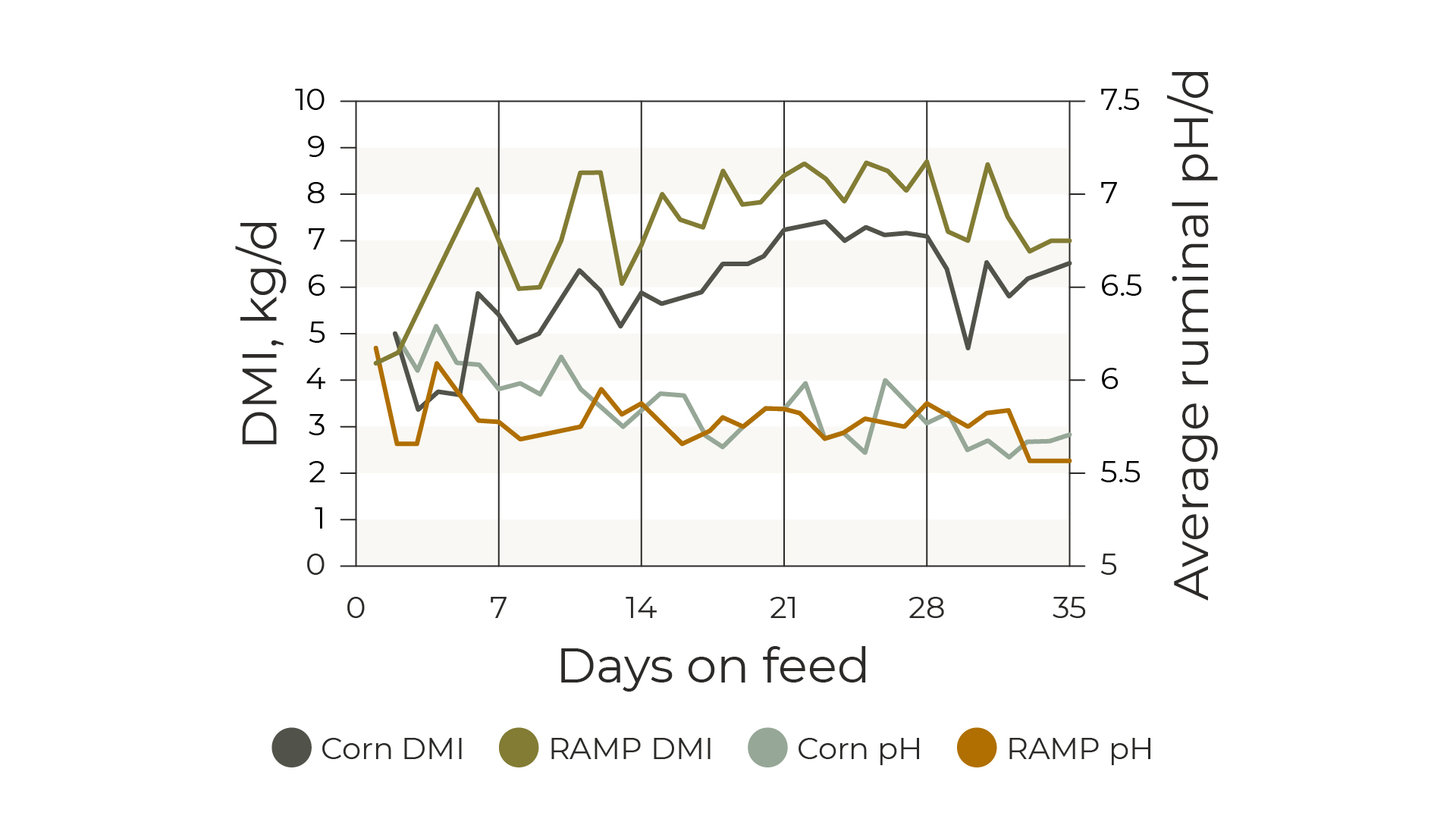
Less variable rumen pH
Higher overall rumen pH
RAMP changes the rumen microbiome, resulting in improved nutrient utilization
RAMP establishes a different microbial population than a traditional starter ration including grain. This sets up the rumen to utilize the entire ration, increasing energy utilization for growth and quickly adapting the rumen to a finishing ration.
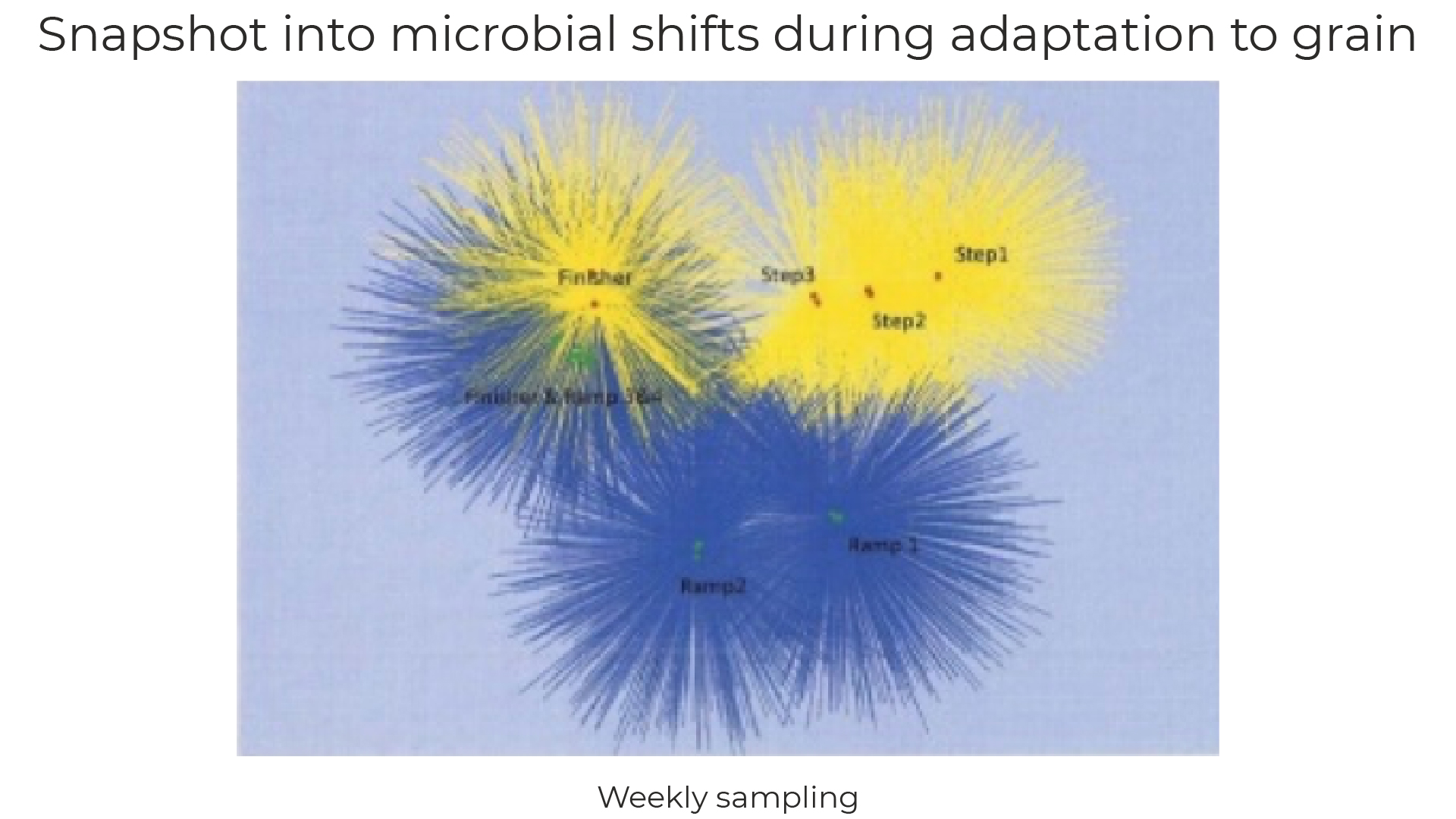
Improved energy utilization
Faster transition to finishing diet
RAMP has a lower GHG (greenhouse gas) impact than traditional starter rations
Cattle started on RAMP have lower enteric methane production and methane is reduced by 10.5% g/d on average from start to finish for feedlot cattle.
Reduces methane (g/d) by 10.5%
Operational Efficiency
RAMP creates a cushion between feed batching and feed delivery, giving the mill more catch up time and contributes to improved on-time feed performance.
Reduces time and labor costs to make a starter ration at the feedyard
Improves on-time feed performance
Eliminates sourcing and storage of starter ingredients
Research and Documentation
-
Internal Evaluation of RAMP in starter diets using rumen-fistulated cattle2011 Cargill Metabolism Research Facility. Elk River, MN
-
Peer
Using RAMP for receiving cattle compared to traditional receiving diets
2013 University of Nebraska-Lincoln

-
Peer
Rumen bacterial communities can be acclimated faster to high-concentrate diets than currently implemented feedlot programs
2015 University of Nebraska-Lincoln
-
Peer
Grain adaptation of yearling steers to steam-flaked corn-based diets using a complete starter feed
2012 Texas Agrilife Research, Amarillo, TX
-
Peer
Complete-feed diet using RAMP in grain adaptation programs
2012 University of Nebraska-Lincoln
-
Peer
Evaluation of gas emissions from cattle on different diet adaptation strategies using either forage or RAMP
2024 University of Nebraska-Lincoln